New building CAM 2026: a guide for designers, manufacturers and contractors
Since 2 February 2026 the new CAM of the Ministerial Decree of 24 November 2025 apply to public construction contracts. Here is when they apply, what they require and how to prepare.
The new building CAM are those adopted by the decree of the Italian Ministry of the Environment and Energy Security of 24 November 2025, published in Official Gazette no. 281 of 3 December 2025 and in force since 2 February 2026. They replace Ministerial Decree no. 256 of 23 June 2022 and its 2024 corrective decree, and apply to design, works supervision and public works for building projects and civil engineering works. Here you will find when they apply, what they ask of designers, manufacturers and contractors, and how to get organised.
Which decree applies today
The minimum environmental criteria (CAM) are environmental requirements that contracting authorities must include in design and tender documents. The obligation comes from Article 57(2) of the Public Contracts Code (Legislative Decree 36/2023): technical specifications and contract clauses are mandatory, while award criteria must be considered when the contract is awarded on the most economically advantageous tender basis.
For construction, as of October 2026, there is only one reference:
| Item | Building CAM in force |
|---|---|
| Decree | MASE Ministerial Decree of 24 November 2025, “DM CAM Edilizia 2025” |
| Publication | Official Gazette no. 281 of 3 December 2025 |
| In force since | 2 February 2026 |
| Replaces | Ministerial Decree no. 256 of 23 June 2022, as amended by the Ministerial Decree of 5 August 2024 |
| Support tools | MASE circular of April 2026 on the transitional regime, template for the design CAM Report |
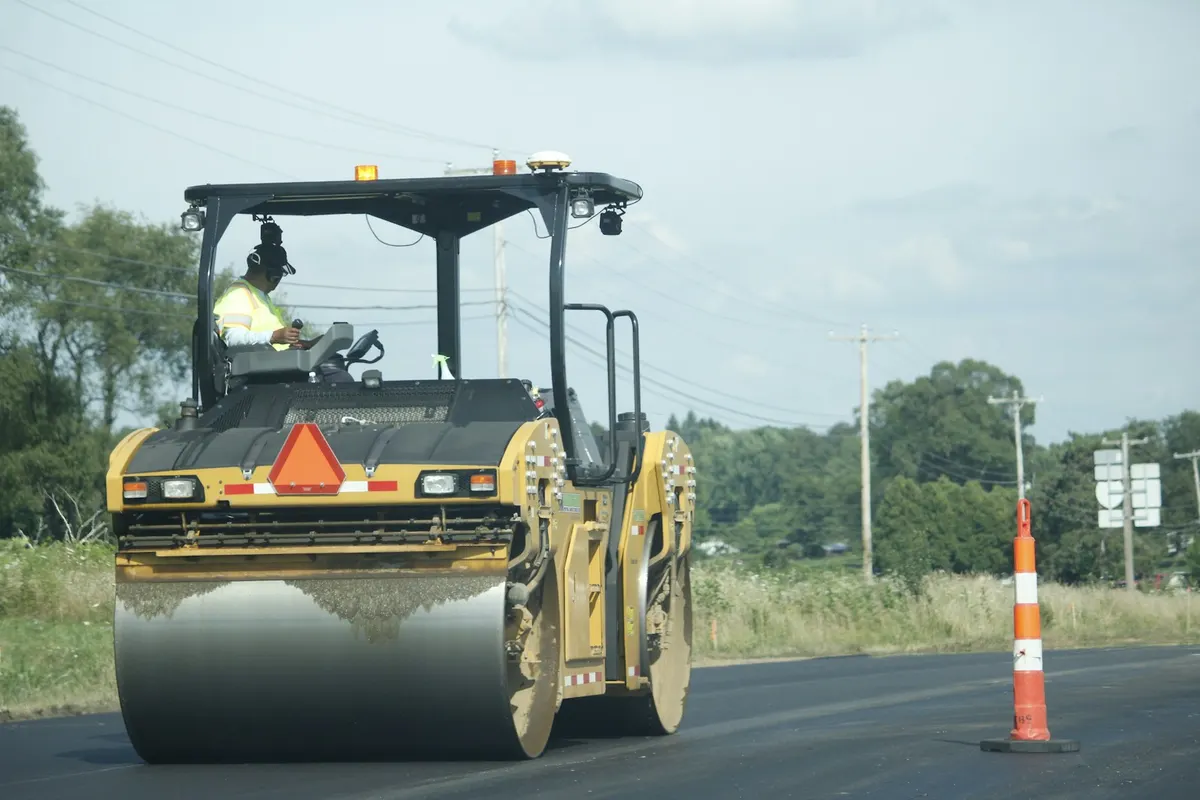
The scope is broader than the name suggests: it covers design and works supervision services as well as construction, renovation, maintenance and upgrading works, including for works other than buildings, as long as no dedicated CAM exist. For roads, for example, the roads CAM apply. Private parties carrying out urbanisation works in lieu of development charges are also bound.
When they apply: the transitional regime
The MASE circular of April 2026 clarified which decree to use depending on the type of contract. In summary:
- design and works supervision services: the date of the call for tenders or invitation is what counts. Tenders launched from 2 February 2026 follow the new decree;
- works and joint contracts for detailed design and works: the new decree applies if the design on which the tender is based was drawn up, verified and validated according to the 2025 CAM;
- design carried out in-house by the contracting authority: all designs not yet validated on 2 February 2026 must be brought into line with the new criteria, even if the assignment had already started.
The old Ministerial Decree 256/2022 remains applicable only under a twofold condition: the design on which the tender is based (technical and economic feasibility design or detailed design) was validated according to the 2022 CAM and the call for tenders is published within three months of validation. Outside these cases, every call for tenders published from 2 February 2026 falls under the new CAM.
What changes for designers
The designer bears primary responsibility for compliance. The decree asks them for three concrete things.
- Design CAM Report from the feasibility stage (PFTE). For each criterion it describes the design choices, indicates the drawings and documents where they can be found and explains any partial application with technical reasons. MASE has published a report template to use as a guide.
- Specifications with requirements and means of proof. The special contract specifications must set out the requirements for each construction product and the documents the contractor will have to deliver to the works supervisor.
- CAM costs in the bills of quantities. From the PFTE onwards, prices must reflect compliant products and environmental site management.
A building LCA study is not a CAM obligation, but it is needed for the award criteria and serves the sustainability report required by the Code. The decree specifies the standards to use (UNI EN 15978, UNI EN 15804, UNI EN 16627 for costs) and a simplified approach inspired by Level(s). If you want to go deeper into the method, read the guide on building LCA under UNI EN 15978.
Many technical design specifications remain: airtightness, acoustic comfort, radon with a reference level of 200 Bq/m³, climate change adaptation, water management, a maintenance plan and an end-of-life deconstruction plan.
If the project is aiming for a voluntary building certification, such as LEED, BREEAM, ITACA or the GBC protocols, the protocol documentation can be attached to the CAM Report. It does not replace the criteria, however: the designer must show, criterion by criterion, the equivalence between the CAM requirement and the protocol requirement. When BIM design is mandatory, the model must also contain the environmental information linked to the technical specifications.
What changes for materials manufacturers
Chapter 2.4 sets the requirements for construction products, which are mandatory for routine and extraordinary maintenance too. Most of them concern the minimum content of recycled or recovered material or by-products, calculated on the weight of the product. Some examples:
| Product | Minimum recycled, recovered or by-product content |
|---|---|
| Ready-mixed and site-mixed concrete | 5% |
| Precast concrete products | 5% (7.5% for autoclaved aerated concrete blocks) |
| Non-alloy structural steel from electric arc furnaces | 75% |
| Steel from the integrated cycle | 12% |
| Clay bricks and blocks for walls and floors | 15% (10% if recycled or recovered only) |
| Glass wool insulation | 60% |
| Cellulose insulation | 80% |
For concrete, precast products and clay bricks, during the first 36 months certificates stating only the total percentage, without a breakdown of the individual fractions, are accepted. Means of proof issued under the 2022 decree remain valid until they expire.
One point needs clarifying straight away: the decree forbids referring to products declared “CAM certified”. Only the proofs specified for each criterion count, such as EPDs with the recycled content percentage, ReMade, Plastica Seconda Vita or UNI/PdR 88 certifications, and FSC and PEFC for timber. Self-declarations under ISO 14021 are not accepted. The details are in the guide to CAM certifications for manufacturers.
What changes for construction companies
For those carrying out the works, the decree provides mandatory contract clauses and award criteria that carry weight in the technical offer.
Obligations on site
- a contractor’s CAM Report, updated during the works and delivered to the works supervisor with the final account;
- at least 70% by weight of non-hazardous waste from construction and demolition (excluding excavated soil and rock) sent for reuse, recycling or material recovery;
- a waste tracking table built on the waste identification forms and on the declarations of the receiving facilities;
- coordinating staff trained in environmental site management, with certificates to be presented on arrival at the site.
Award criteria
- an ISO 14001 environmental management system or EMAS registration, including for suppliers’ plants;
- products with the EU Ecolabel or Made Green in Italy;
- an ESG risk attestation issued by a body accredited to ISO/IEC 17029;
- cement, steel, aluminium and plastics with performance aligned with the EU Taxonomy criteria;
- products from plants covered by the EU Emissions Trading System (EU ETS) or by systems recognised as equivalent.
The 70% requirement is the one that creates the most administrative work, because it must be demonstrated with real data and not estimates. With Envify you can collect the site’s waste forms (FIR) and keep track of the share of waste sent for recovery as the works progress.
How to prepare
Whether you design, manufacture or build, CAM compliance comes down to documents. Some useful steps:
- check which decree applies to the tenders you are preparing, starting from the date of the call for tenders and the validation of the design;
- if you manufacture materials, check for each product which requirement applies and which means of proof you have, with expiry dates;
- if you are a contractor, prepare a CAM Report template and a waste register linked to the FIR before the site opens;
- gather in advance ISO 14001 or EMAS certifications, EPDs and supplier attestations that can earn points;
- keep your data aligned: the same information is needed for the CAM, for client questionnaires and for your sustainability report.
For an overview of how to use environmental criteria to win tenders, you may also find the article on environmental criteria in public tenders useful.
The building CAM in force are those of the Ministerial Decree of 24 November 2025, applicable from 2 February 2026 with a transitional regime limited to designs already validated according to the 2022 CAM. Designers, manufacturers and contractors must prove every requirement with the means of proof specified by the decree: generic “CAM product” claims are not enough.