EED, Directive (EU) 2023/1791: what changes and transposition in Italy
The EED sets an 11.7% cut in EU energy consumption by 2030 and brings new obligations for public bodies and companies. Italy is late with transposition: here is what it requires and where things stand.
Directive (EU) 2023/1791, known as the EED, is the new European directive on energy efficiency: it requires EU energy consumption to be cut by 11.7% by 2030 compared with reference projections and makes the “energy efficiency first” principle binding. It was due to be transposed by 11 October 2025, but as of October 2026 Italy has not yet published the implementing decree and on 1 October it received a reasoned opinion from the European Commission.
What the EED, Directive 2023/1791, is
The Energy Efficiency Directive (EED) was adopted on 13 September 2023 and came into force in October 2023. It is a recast: it replaces Directive 2012/27/EU, repealed from 12 October 2025, and is part of the “Fit for 55” package, through which the Union aims to cut net emissions by at least 55% by 2030.
The reasoning is simple: the cheapest and cleanest energy is the energy you do not consume. That is why the directive treats efficiency as an energy source in its own right, with binding targets and obligations for Member States, public bodies, companies and energy suppliers. It is a key tool for decarbonisation, alongside the Renewable Energy Directive and the Energy Performance of Buildings Directive.
Being a directive, it does not apply directly to citizens and companies: each Member State must transpose it through its own law. This is where Italy is currently behind.
The 2030 targets and the savings obligation
Article 4 sets the main target: Member States must collectively ensure a reduction in energy consumption of at least 11.7% in 2030 compared with the projections of the EU 2020 reference scenario. In absolute terms, the Union’s final energy consumption must not exceed 763 Mtoe, with an indicative target of 992.5 Mtoe for primary energy. Each Member State sets out its own contribution in its National Energy and Climate Plan (NECP, PNIEC in Italy).
Article 8 adds a cumulative energy savings obligation, i.e. new savings every year, calculated on average final consumption in the three years before 2019:
| Period | New annual savings required | Notes |
|---|---|---|
| 2021-2023 | 0.8% of final consumption | Level inherited from Directive 2012/27/EU |
| 2024-2025 | 1.3% | First increase under the EED |
| 2026-2027 | 1.5% | The level in force today |
| 2028-2030 | 1.9% | The obligation continues after 2030 |
Member States can achieve these savings through obligation schemes for energy suppliers or through alternative measures, such as incentives and tax instruments. Part of the savings must come as a priority from households in energy poverty and from vulnerable customers.
The “energy efficiency first” principle
The most cross-cutting change is the “energy efficiency first” principle. It previously existed as guidance; with the EED it becomes a legal obligation. Member States must assess efficiency solutions in relevant planning, policy and investment decisions, including outside the energy sector, and prefer them when they are more cost-effective than new generation or grid capacity.
For companies the effect is indirect but concrete: calls for proposals, incentives, permits and major public investments will tend to reward those who reduce energy demand before increasing supply.
Public sector: consumption, buildings and procurement
The directive asks the public sector to lead by example, with three main obligations:
- reducing consumption: the final energy consumption of all public bodies, taken together, must fall by at least 1.9% a year compared with 2021;
- renovating buildings: every year at least 3% of the floor area of public buildings over 250 m² that are not nearly zero-energy must be renovated to become zero-emission or at least nearly zero-energy, based on a public inventory of buildings;
- procurement: public administrations must purchase products, services, buildings and works with high energy efficiency and apply the energy efficiency first principle in tenders.
The last point also directly affects private suppliers: those bidding in public tenders will increasingly have to demonstrate documented energy performance, as already happens with environmental criteria in public tenders.
What changes for companies
For businesses the most important change is in Article 11: audit and energy management obligations no longer depend on company size but on consumption. Above 10 TJ of average annual consumption, an energy audit is required at least every four years, with an action plan to be published; above 85 TJ, a certified energy management system is required. Thresholds, deadlines and exemptions are explained in the guide to the energy audit obligation in 2026.
The other chapters that affect companies:
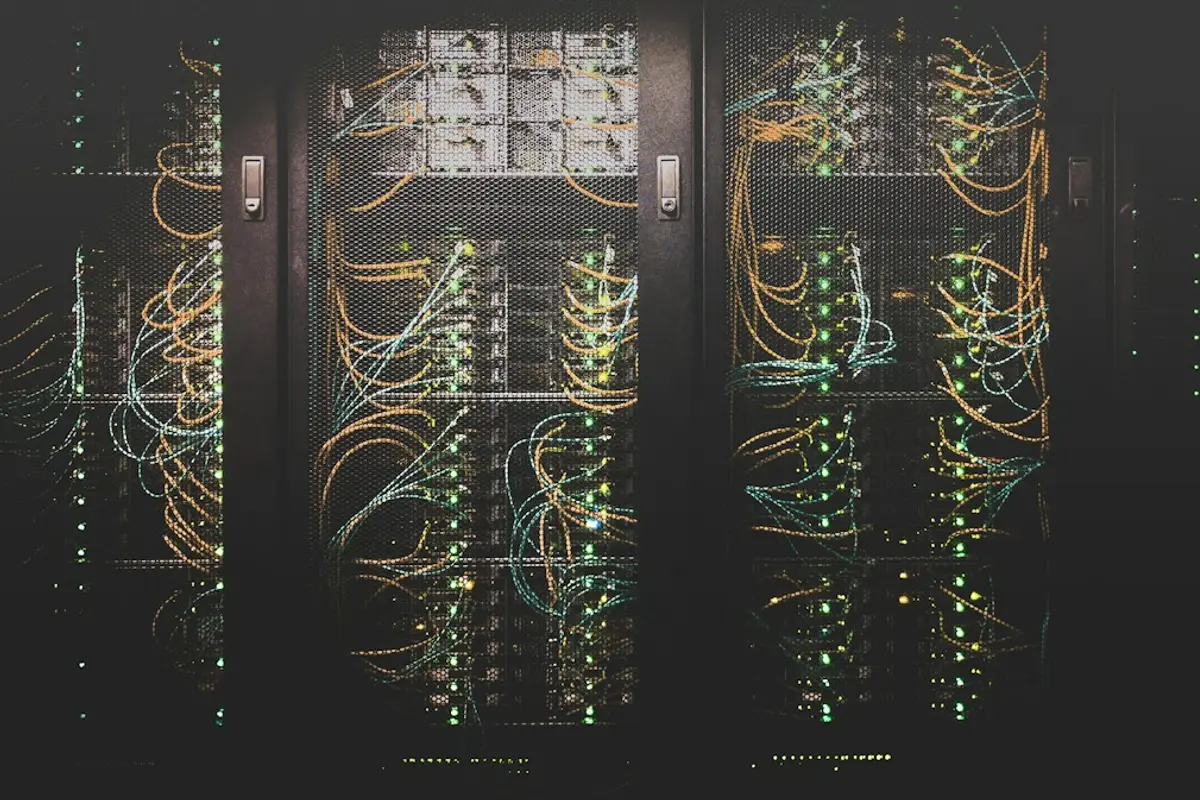
- data centres: since 2024, operators of data centres with at least 500 kW of installed IT power must report energy performance indicators every year to a European database, as explained in the article on the new EU data centre rating;
- waste heat: new installations, or those undergoing substantial refurbishment, above certain capacities (for example industrial installations with an average total energy input above 8 MW) must carry out a cost-benefit analysis on the use of waste heat;
- energy services: the directive strengthens the qualification of auditors and energy service providers and promotes energy performance contracts;
- SMEs: Member States must set up programmes to encourage and provide technical support to SMEs that are not obliged to carry out voluntary audits and implement their recommendations, and may add financial support.
For those reporting on sustainability, the directive also encourages publishing energy and water consumption in the annual report: data that matches what the VSME standard and the calculation of Scope 2 emissions require.
Transposition in Italy: where things stand
The general transposition deadline was 11 October 2025, with specific dates for some provisions. As of October 2026, the situation is as follows:
- in November 2025 the Commission sent letters of formal notice to 26 Member States, including Italy, for incomplete transposition;
- a draft legislative decree dated October 2025 has circulated, which rewrites the national framework and is expected to replace Legislative Decree 102/2014; the final text has not been published in the Official Gazette;
- on 1 October 2026 the Commission sent Italy, together with Greece, Spain and Malta, a reasoned opinion (procedure INFR(2025)0334): the country has two months to respond and complete transposition, otherwise the case may be referred to the Court of Justice of the EU.
In the meantime, the rules of Legislative Decree 102/2014 remain in force for companies, with the audit obligation for large and energy-intensive companies. A directive that has not been transposed does not, as a rule, impose obligations directly enforceable with penalties on private parties, but the picture can change quickly: a decree published close to the European deadlines would leave little time to adapt.
What to do now
There is no need to wait for the decree to get ready. The useful actions are the same in any scenario:
- Reconstruct your energy consumption for the last three years, by site and by energy carrier, starting from bills and invoices.
- Calculate the three-year average in TJ and compare it with the 10 and 85 TJ thresholds.
- If you are close to the thresholds, consider whether a voluntary audit or an energy management system makes sense.
- Link your energy data to your emissions inventory and to a reduction plan, so the same work serves regulation, clients and banks.
- Follow the publication of the decree in the Official Gazette and ENEA’s operational guidance.
The EED sets an 11.7% cut in consumption by 2030, a savings obligation rising to 1.9% a year and the energy efficiency first principle. For companies, Article 11 matters most, with obligations linked to consumption. Italy has not yet completed transposition: for now the rules of Legislative Decree 102/2014 apply.